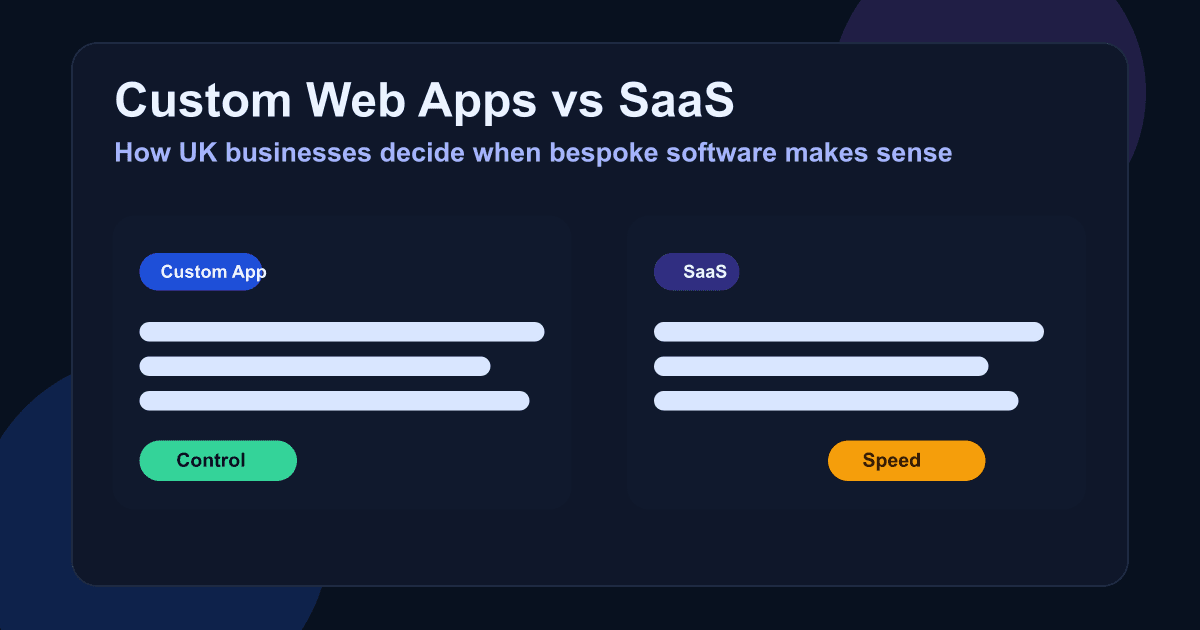
SaaS is fast until it starts creating friction
Off-the-shelf tools are often the right first step. They are fast to launch, easy to justify, and useful for proving demand. The problem starts when your workflow becomes more valuable than the tool you are forcing it through.
That is usually the moment businesses begin looking at custom web application development: when process complexity, compliance, reporting, or user experience become competitive advantages rather than admin tasks.
Three signs a bespoke platform is the better option
- You are paying for several tools but still moving data manually between them.
- Your team works around the software instead of the software supporting the workflow.
- You need permissions, reporting, or automation that your current stack cannot handle cleanly.
What bespoke platforms do better
A bespoke platform gives you control over the user journey, the data model, the operational rules, and the performance budget. That matters when the platform itself is part of the product, not just internal plumbing.
Custom logic
Tailor workflows, approvals, and actions to the way the business actually operates.
Cleaner UX
Remove unnecessary screens, forms, and settings that belong to generic tools, not your users.
The real commercial question
The decision is rarely “custom or SaaS” in the abstract. The real question is whether the software can remove enough friction, unlock enough efficiency, or improve the customer journey enough to justify the build.
If the answer is yes, a well-built web application can become a long-term asset that compounds value instead of another monthly workaround.